
You may have seen beautiful, colorful skirts swishing around in Indian movies and celebrations. These full, flared skirts are called ghagras and they are often paired with a fitted blouse called a choli. Together, the ghagra and choli make up one of India’s most popular outfits that reflects the country’s rich culture.
The ghagra is usually made of cotton, silk, or another light fabric that flows nicely when the wearer spins and dances. Traditionally, the skirt can be plain or elaborately decorated with embroidery, mirrors, sequins, gold or silver thread, or small bells. A drawstring tie or elastic band at the waist keeps the ghagra in place. The skirt flares out dramatically from the hips or waist to the ankles, with lots of fabric that swishes around as the wearer moves.
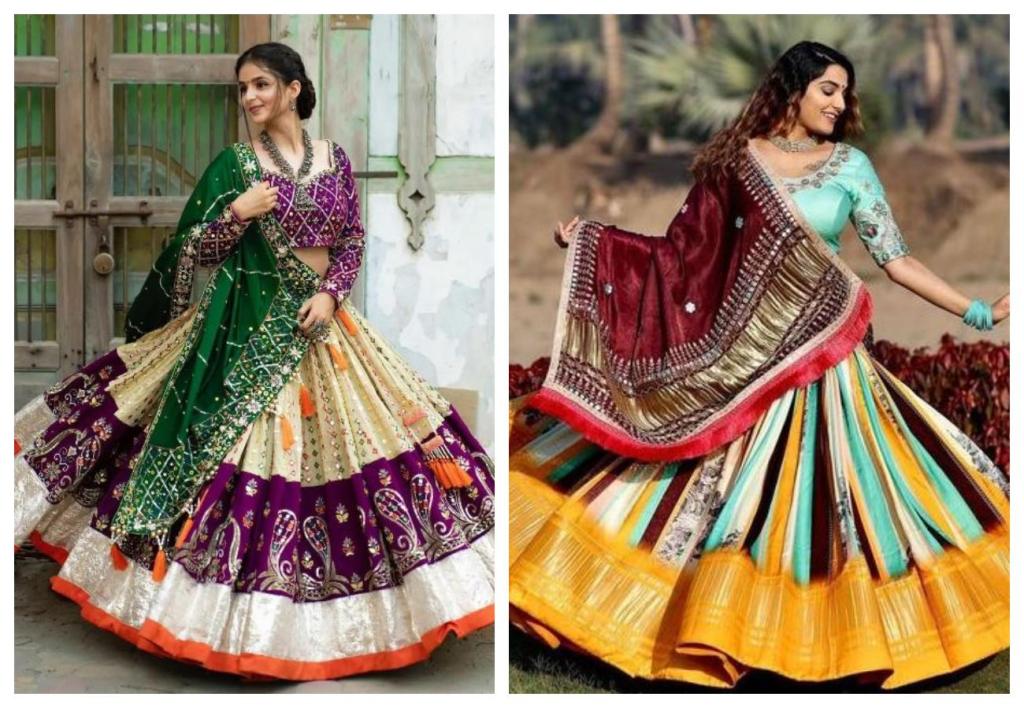
Indian women pair ghagras with cholis – short, fitted blouses that end at or just below the waist. Cholis can have short sleeves, half sleeves, long sleeves, or no sleeves at all. Like the ghagra, cholis may be ornamented with intricate embroidery, mirrors, sequins, gold thread, or beads that create beautiful patterns across the fabric. Low-cut necklines and backs are common for cholis.
The ghagra choli has been worn in India for centuries and began as everyday clothing for women in many regions. The flowing ghagra was practical and comfortable for the warm climate, while the choli offered stylish slim-fitting support. But the ghagra choli grew to become more than just a practical outfit – the beautiful coordinates became an elegant cultural icon for Indian women.
Newly married brides often wear ghagra cholis in red, a color considered auspicious. The red skirt and blouse signify the bride’s happiness and prosperity entering her new life and family. Brides decorate the outfit elaborately with gold accents and intricate designs that can take months to hand embroider on the fabric.
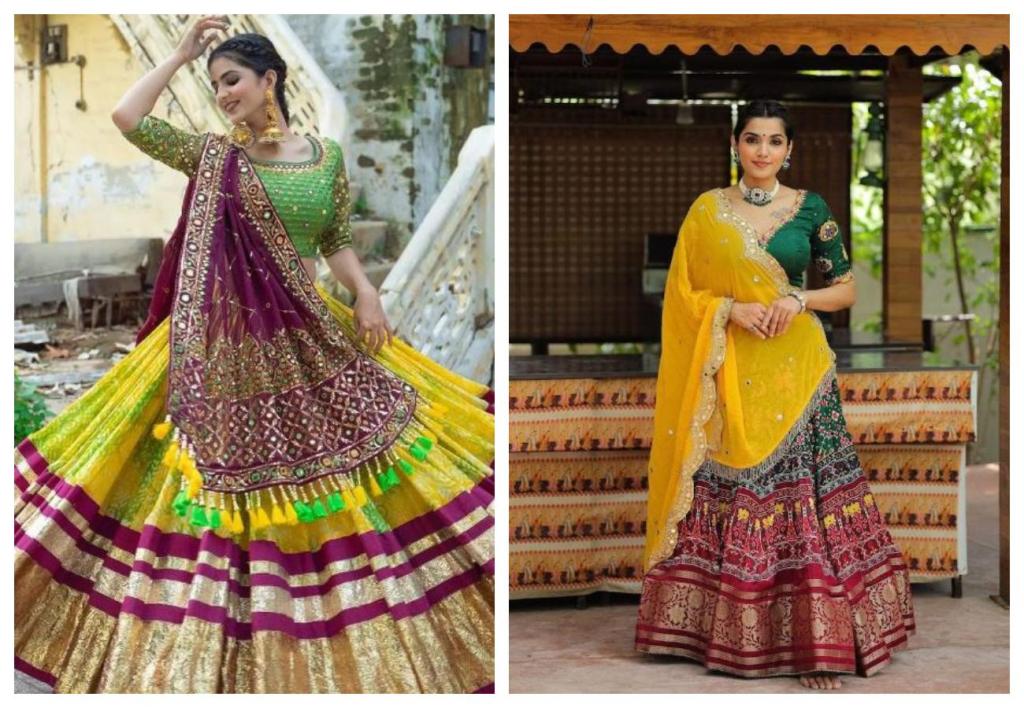
Ghagra cholis remain popular outfits for Indian weddings and festivals today among both brides and guests. The joyful swishing skirt encourages dancing, while the fitted choli flatters the upper body. Bold colors and sparkling accents reflect the merriment of celebrations. Modern designs incorporate new fabrics like velvet, georgette, and satin for a regal look.
During cultural festivals like Navratri and Diwali, women across India wear ghagra cholis while performing traditional dances like Garba and Bhangra. The full swirling skirts accentuate the spinning and clapping that the dances feature. Stitched with mirrored pieces, sequins, and embroidery, ghagras shine and sparkle under the lights during the festivities.
Beyond weddings and festivals, ghagra cholis now come in everyday styles too. Casual cholis may feature simple necklines, short sleeves, and no embellishments. Everyday ghagras skip the heavy embroidery and opt instead for minimal decoration or prints. Cotton and georgette replace elaborate silks and velvets, great for wearing in hot weather.
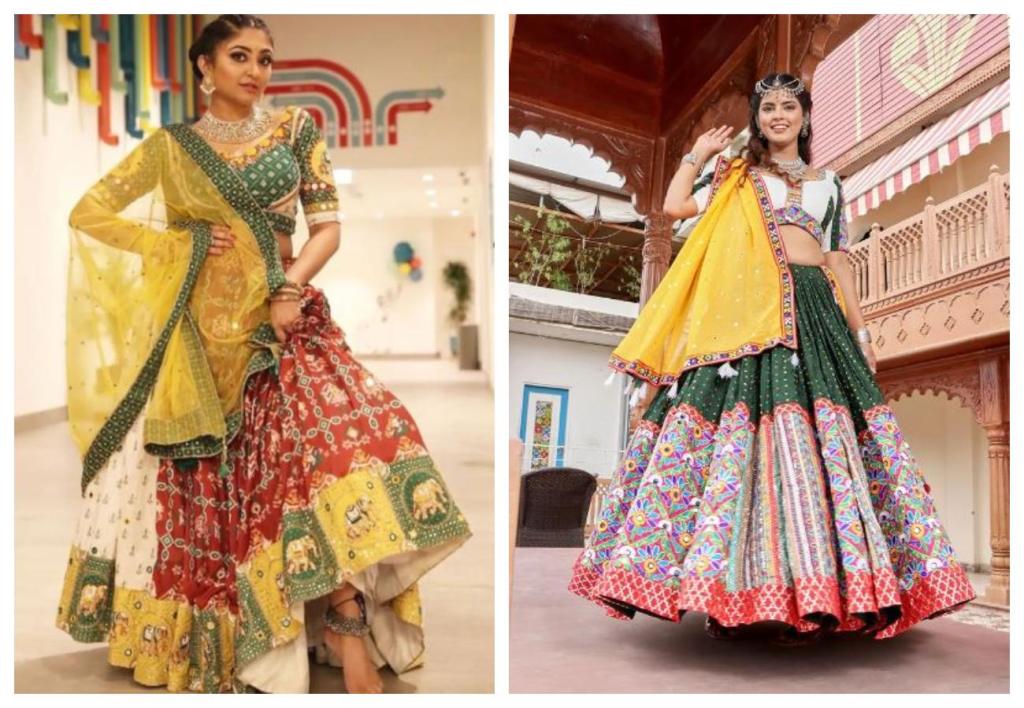
The ghagra has also inspired fashion globally, most notably the full-skirted ball gowns seen at formal events worldwide. Princess gowns, complete with tiaras, draw inspiration from the royal origins of heavily decorated Indian ghagras fit for royalty. But modern designers create fusion ghagra gowns that blend Indian and Western cultures for a beautiful new take on a traditional garment.
While the outfit has many names – the lehenga choli, gagra choli, or the skirt and blouse, it remains beloved in India and iconic of Indian culture. The graceful ghagra and elegant choli combine in a majestic ensemble that represents India’s history, celebrates festivals and marriages, and inspires fashion around the world. Its evolution over the centuries keeps the ghagra choli timelessly relevant while still treasured as a traditional dress. Swirling and sparkling, the ghagra choli ensemble reflects the color, joy, and vibrancy of Indian culture for women in India and across the globe.
 Miss Fashion Smoke Blog
Leave a comment