
While there are many options for brides to wear on their wedding day, one popular choice has been and continues to be the lehenga. The lehenga continues to evolve and develop modern elements while maintaining its traditional roots. Some of the newest styles include the combination of pastel shades and floral prints in lehengas. Using soft pastel colors with flowers adds a romantic, delicate quality to a traditionally bold and vibrant wedding outfit. Because pastels have a light, airy look to them, they complement flower patterns well. Creating an overall impression that is modern but that maintains an elegance and looks clean. Here are a few tips on how to mix and match pastel and floral elements to achieve a flawless outfit.

1. Choosing the Right Pastel Palette
The first step in the design of a lovely pastel floral lehenga is to choose the right colors in pastels. Pastel colors are soft colors that tend to have a calming visual appeal. Pastels range from lighter pastel hues (light pinks, mint greens, and lavender) to darker (dusty rose and teal) and more muted pastel hues (powder blue, tan, and pale yellow). Consider your skin tone when selecting the pastels used to create your lehenga.
- If you have high color contrast (bright) and a fair skin tone, you will find that blush pinks, lavenders, and pale yellows complement your skin tone nicely.
- If you have a medium or olive skin tone, shades like mint green, peach, and light coral can provide a lovely accent without overpowering your natural color.
- If you have a deep skin tone, warm pastels such as peach, pale lavender, and powder blue can create a lovely contrast which enhances your natural beauty and glow.
Finally, when selecting the pastels for your lehenga, be sure to also consider the season of when your event will occur. Lighter pastel colors generally can be used for spring or summer wedding events; whereas darker pastels (dusty rose or teal, for instance) may be appropriate for an autumn or winter wedding.
2. Selecting the Floral Prints
Lehenga floral print creates an exciting new twist on the traditional Indian wedding dress. Mixing floral prints with pastel colors requires some planning and attention to detail. The floral print should enhance the delicate aesthetic of the pastel shades on your lehenga rather than overpower them. Here are some suggestions when picking floral patterns for your lehenga:
Small and delicate florals: Choose small, delicate flower prints that provide a soft, feminine touch. Small roses, peonies and daisies in pastel colors will not take away from the pastel shades of your lehenga, rather will compliment them.
Bold florals: If you like to make a statement with your floral print, go for bold, large florals that really make an impact. Pair these bold floral patterns with a pastel background to allow the florals to pop while still maintaining a soft, feminine feel.
Monochromatic florals: A monochromatic floral lehenga can give you a very sophisticated and chic look. Monochromatic implies that all of the floral patterns are painted in one shade of a pastel color. A monochromatic floral lehenga will have a very sophisticated and elegant appearance, yet still retain its floral theme.
3. Fabrics that Work Well with Pastels and Florals
Pastel hues and floral patterns are best highlighted by the right fabric for your lehenga. Lighter weight materials such as georgette, net or chiffon blend beautifully with pastel floral prints and give your outfit an airy and light feel. The flowers can appear soft and flowing in chiffon, net and georgette, which add to the romantic and ethereal quality of the lehenga.
Satin or silk lehengas also work well in pastel colors when combined with floral embroidery or print. The shine of these fabrics creates a nice contrast to the softness of pastels and provides a soft yet regal appearance.
Those brides who wish for texture in their outfits can also choose to incorporate embroidered or 3D floral embellishments with their pastel lehenga. By doing so, they will create a unique and luxurious look that still maintains its romantic delicateness.
4. Accessorizing the Pastel Floral Lehenga
The main factor in accessorizing your pastel floral lehenga is the accessories with which to accessorize it. Because pastel tones are very subtle, you can accentuate your overall appearance by adding bold accessories that complement the lehenga without making it an overpowering item of clothing.
Jewelry: To achieve this desired effect, it is best to wear gold or rose gold jewelry. Gold is an excellent complement to the softness found in pastel shades. Consider a wide range of delicate jewelry pieces, such as chokers, jhumka earrings, layered necklaces, and those that include pearl or diamond accents.
Dupatta: A sheer dupatta will work well if your lehenga has either floral embroidery or floral print. Alternatively, you could opt for a solid-colored dupatta that complements the floral prints or a pastel dupatta with a floral print that contrasts. This will lend your outfit a modern and bold appearance.
Footwear: Wear soft shoes or flat sandals that are decorative or embroidered with floral motifs or that have been embellished. For a more formal appearance, pastel-colored heels or embellished juttis will be perfect.
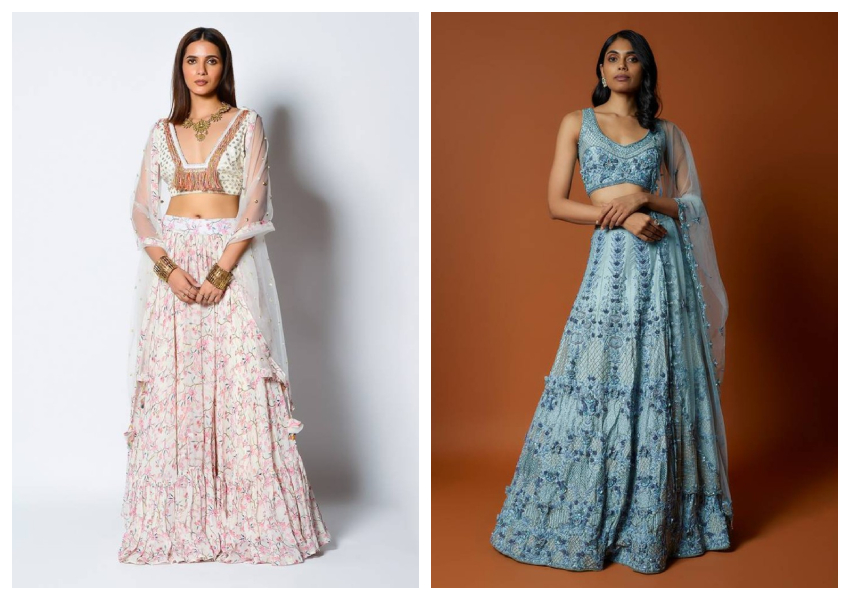
5. Floral Lehengas for Different Occasions
Pastel floral lehengas are so flexible that they can be used by a bride on her wedding day (wedding), as well as for other events like mehendi, sangeet, or engagement ceremonies.
For a bride, a pastel floral lehenga on her wedding day gives off an elegant, dream-like quality to her look. For example, try a light peach lehenga with delicate white floral embroidery and a light flowing dupatta with minimal jewelry to create an effortless bridal beauty.
For bridesmaids, pastel floral lehengas are excellent choices for bridesmaids, as they create visual interest and give the bride the opportunity to stand out. Select pastel shades that complement the colors of the wedding. Floral lehengas in pastel shades can be worn for other cultural celebrations like Diwali and for family gatherings. They are a nice fusion of modern and traditional styles and can easily transition from a contemporary setting to a more traditional setting.
 Miss Fashion Smoke Blog
Leave a comment