
An Icon as Much as a garment – the red lehenga has been around for thousands of years. This vibrant red has represented love, fertility, prosperity and new beginnings to the Indian bride. Today it still represents these things, plus it is a fashion statement in today’s world of customization and individual dress standards. The bride of today does not just wear the red lehenga, she reclaims it as a way of finding her own identity and self-empowerment with a distinct voice, yet it is still considered a true icon for many Indian brides.
Wearing a red lehenga today does not signify going along with tradition; rather, it signifies confidence in being part of fashion history as well as being culturally connected to one’s heritage.
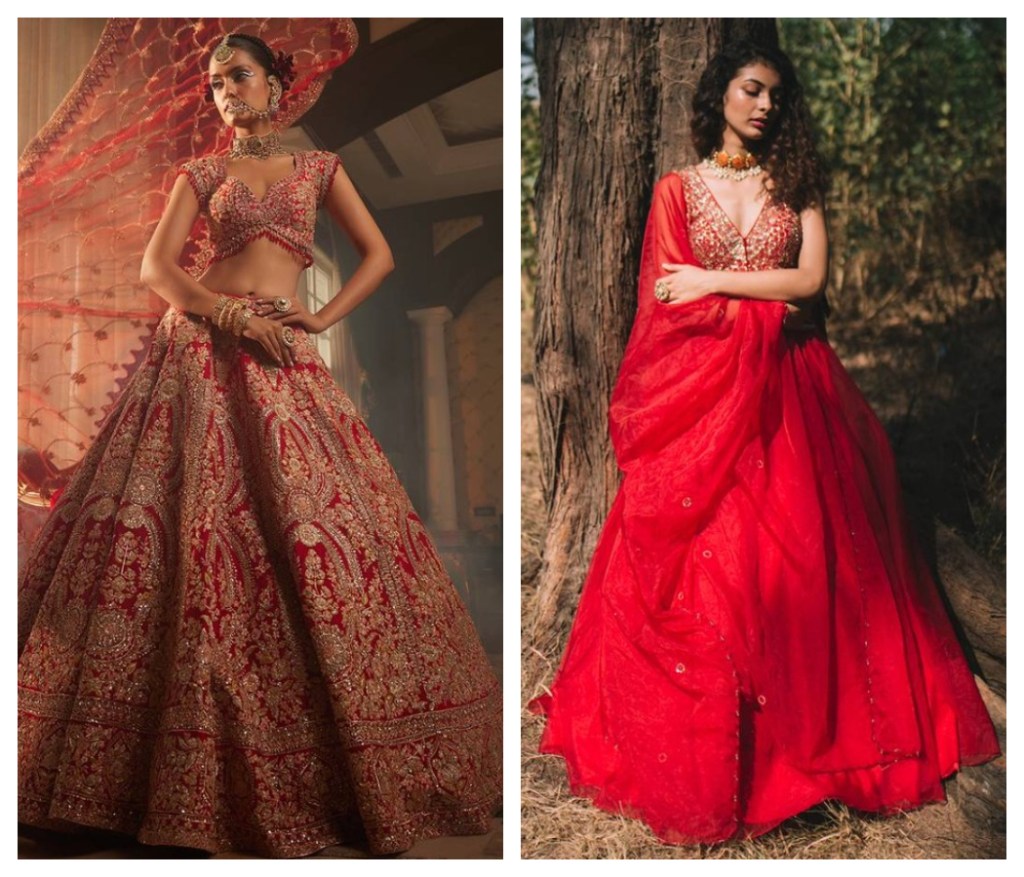
Defining Your Own Unique Red Through Cultural Experience
Looking for your own personal power in the red lehenga choli starts by stepping outside the conventional “bridal red.” Today’s red spectrum encompasses many hues, providing many opportunities to pick a color that fits you and complements your skin tones.
For instance, the “bold” shade of bright red such as scarlet or crimson expresses exuberance, boldness and a full embrace of the joyful celebration.
The “elegant” shade has more dramatic hues such as wine red, ruby red, or sangria red that convey deep, aristocratic sophistication. These shades appear to be especially reflective of light when made using luxurious fabrics like velvet or heavy silk adding to the grounded confident nature of the purchaser.
The “fresh” shade includes reds with orange or pink undertones such as vermilion and coral red. The colors are cheerful and lighter than those that would be considered traditional bridal colors. The contemporary bride may prefer a traditional red in a more modern and joyful form.
When one carefully chooses a red that complements the skin tone, they turn the traditional made garment into a representation of their individual personality and natural attractiveness.
Lehengas: The Material Influence on Formal Wear
Lehenga, which often draws attention with its bright red color, can be just as impactful because of the way it feels against the skin, as well as how it drapes and flows from shoulder to ankle or calf.
Brocade and Silk – Both are shiny and beautiful and exemplify formality and classic elegance. These two materials maintain their place in the tradition of lehenga making throughout the years.
Velvet – The richness of velvet and its dark (and in many cases, black) shade adds a greater sense of weight and richness to lehengas, especially during cold weather (winter or winter wedding).
Georgette and Tulle – These types of fabrics provide an option for brides who desire to wear something more “soft” or airy than traditional lehenga looks. In this instance, the embroidered designs are truly the focal point in providing the effect of movement in these types of looks.
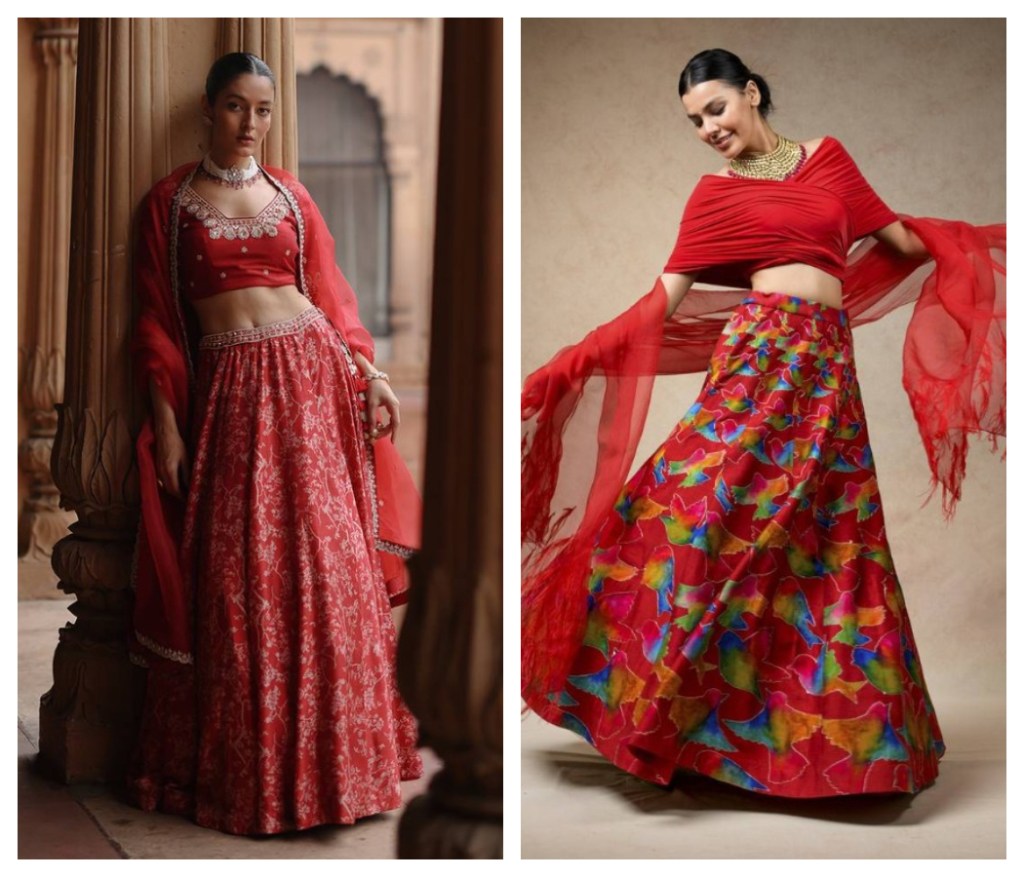
The Red Lehenga: A Form of Empowerment Through Symbolism
The Red Lehenga choli is a symbolic representation of strength. It serves as a traditional base for the entire look, allowing all of the other choices (jewelry, hair, makeup) to be personalized.
Jewelry Selection: A red lehenga showcases gold, polki, and Kundan jewelry in a way that highlights the richness of these heritage options. By wearing jewelry that has been made by an ancestor or crafted by hand, you are connecting to the power of your ancestors, while continuing their legacy.
Confident Style: Instead of being limited by the lehenga’s vibrant color, you can enhance your presence with confidence. A confident stance and an understated makeup look combined with a selected hairstyle take traditional attire and add an aura of confidence and elegance.
Ultimately, a red lehenga set provides the bride with an opportunity to show that she has been given the beauty of the tradition for centuries, but she remains completely herself. The red color represents a signature color and signifies that she is the star of her own powerful narrative.
 Miss Fashion Smoke Blog
Leave a comment