
For many generations in India, bridal styles (fashion) have always had the same familiar color palette. Traditionally, red captured the idea of abundance and marital bliss; however, as brides have slowly begun to change wedding traditions, the introduction of pastel hues became an option, indicating a shift in style towards a softer contemporary version (today). Now the introduction of navy blue as an alternative to the pastel hue is starting to show itself more strongly for brides who want to have a statement at their wedding with a classic color choice.
Navy blue as a traditional and modern combination may signal a new direction in Indian bridal fashion. Although navy is a modern color and has not really been used traditionally, the Indian culture has always associated blue with the depth of the ocean, strength, and spirituality. The color blue has always symbolized leaders and serenity (calmness) and this is evident in the depictions of Lord Krishna, the Royal Court’s color palette, and the color that many use for ceremonial occasions such as weddings. A bride can honor her cultural roots while expressing a fresh and unique form of bridal elegance when she chooses to wear a navy blue lehenga.
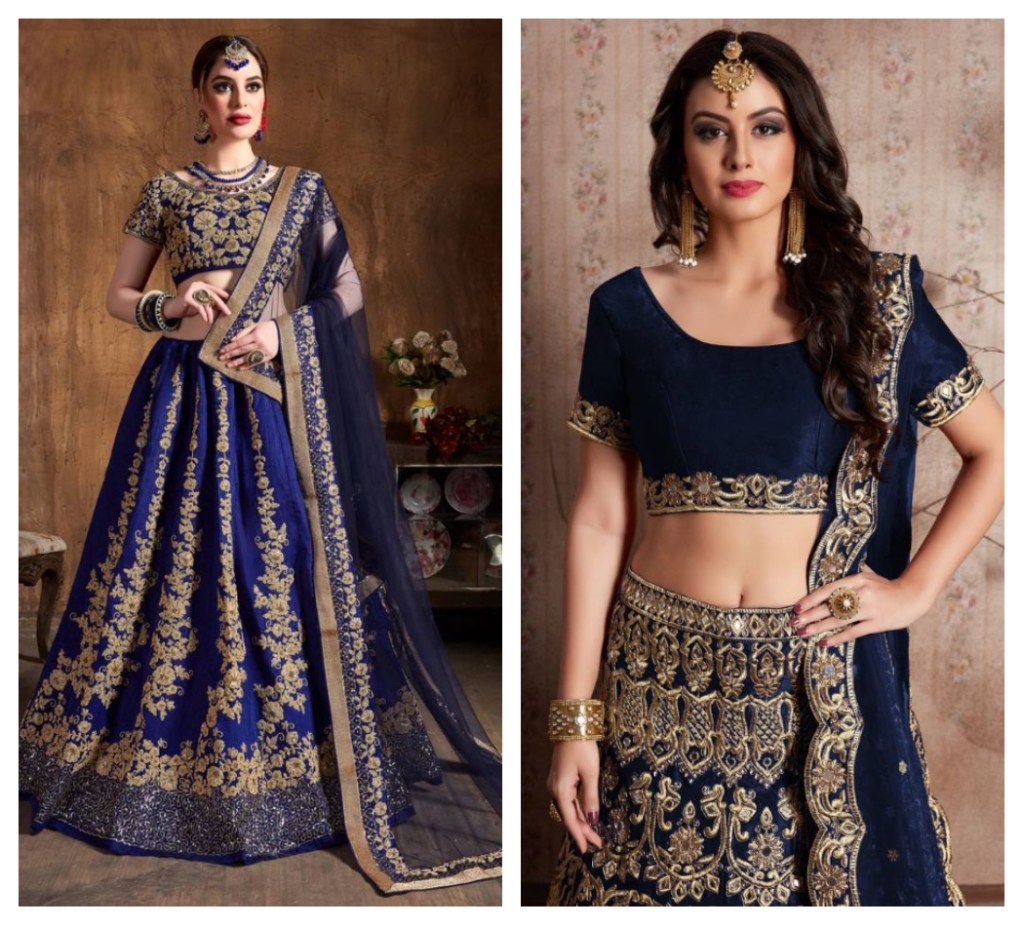
Going Away from the Common Picking for Bridal Attire
Brides have branched out when it comes to what they consider a “bridal” look. They appreciate tradition but want their bridal outfit to show their personality. Red can be expected, and although the pastel colors are gorgeous, pastel color choices have been done too often. Navy blue is a great choice; it creates an impression that is both sophisticated and subtle, giving brides a way to be unique but also keep the focus on them.
Ideal For Nighttime Parties/Festivities
One major reason for the rise in popularity of navy blue lehengas is their presentation during night functions. Navy blue looks amazing under the warm lighting of candles, chandeliers, or any type of overhead lighting; therefore, it is a perfect choice for a reception or any kind of evening events (sangeet or a cocktail party). Navy blue “pops” due to its deep color property as opposed to the lighter shades, which tend to blend in with the other colors / lighting and not be as standout as the bride should be.
Embellished Dream Canvas
The deep shade of navy blue is the ideal backdrop to display the intricate embroidery/embellishment of a lehenga. Gold Zari, silver threadwork, sequins, pearls and mirror work all pop with brilliance on this dark canvas. Designers have taken advantage of this versatility by experimenting with heavy embroidery, modern cuts and statement blouses creating a bridal look that is regal, polished, and thoughtfully designed.
Universally Flattering for All Skin Tones
Another reason brides are drawn to navy blue lehengas is their universal appeal. The rich navy blue color works well on all skin tones, accentuating their natural features without being too overpowering. It also photographs beautifully in both natural and added light, providing a collection of timeless wedding photos that will continue to be elegant for years to come.
Connection to Endless Styling Options
Styling a navy blue lehenga gives a bride the freedom to pair it with whatever type of jewelry she feels like wearing, including traditional gold, kundan or polki, for a classic royal look or diamonds and modern accessories for a contemporary edge. Make-up options range from soft, glowing neutrals to bold smoky eyes and dark lipsticks, allowing brides to tailor their look to their own personal style. Contrasting dupattas in or on shades of ivory, blush, gold or even red add another layer of elevation to the ensemble.
A Decision That is Unique and Classic
When it comes down to why brides are opting for navy blue lehengas so often today, the biggest reason would likely be how the color provides the bride with an individual sense of style. Among a sea of white and pastel brides, the navy blue color appears to be much more purposeful and creates a feeling of personal expression. It shows a confidence within the bride herself, a sense of maturity through age and experience, as well as an understanding of cultural heritage in a personal way.
 Miss Fashion Smoke Blog
Leave a comment