
Historically, silk lehenga skirts have been at the forefront of Indian bridal looks. However, as we head into 2026, it seems that heritage weaves are now taking centre-stage in Indian weddings more than ever before. Brides are shifting away from just adornment and instead on investing in the category of craftsmanship, legacy and authenticity. Antiquity has provided the two most popular silk weaving traditions, Banarasi and Kanjeevaram, which are now leading this trend as a revival of both of these timeless methods by designers and brides alike in a new modern way.
So, which type of weave is trending this year? Let’s take a look.
The History of Banarasi Silk Lehenga Cholis
Banarasi silk originates from the city of Varanasi, and it is best known for its intricate zari (gold thread) work, Mughal style motifs and soft, flowing drape. In the past decade, Banarasi silk, historically found primarily in saree styles, has transitioned seamlessly into lehengas. For the upcoming 2026 season, there will be a clear move by designers to use finer weaving techniques, lighter weight constructions and more experimental color palettes when creating these garments.
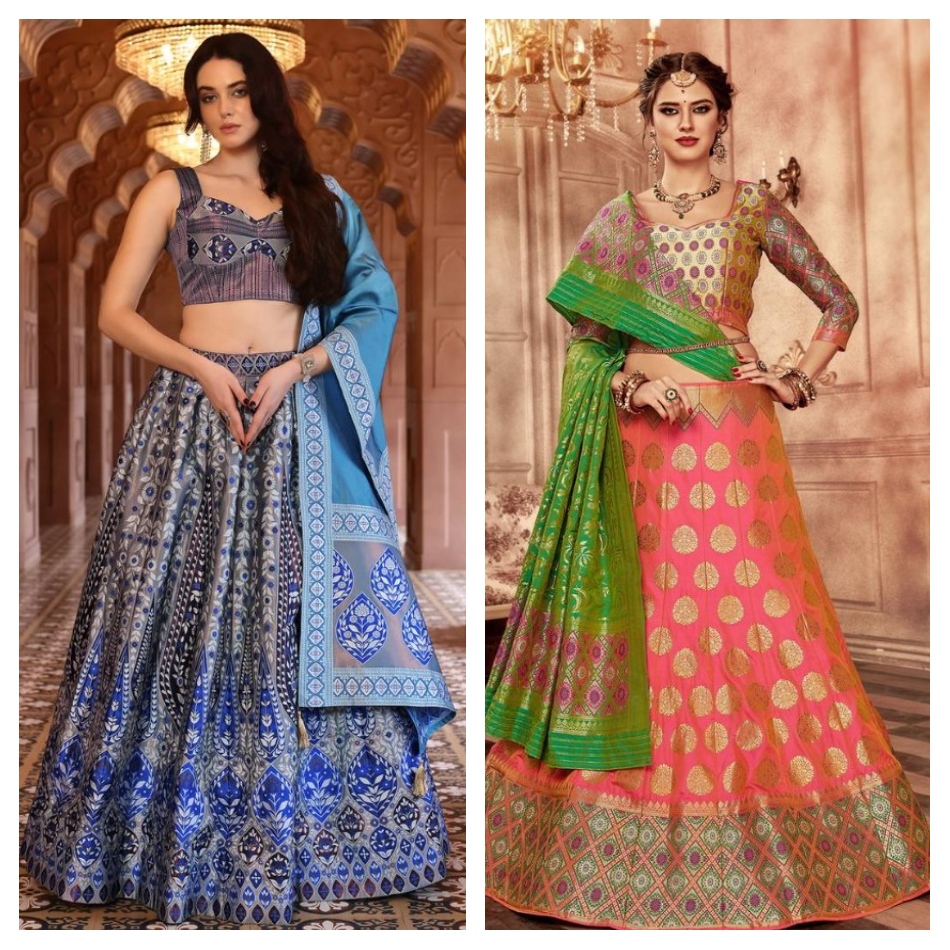
For this season’s lehenga cholis, we will see muted pastel tones, dusty rose, sage green, and champagne color ways featuring antique gold zari thread. Rather than creating volume in the can-can layers, the current trend will see a softer volume and a more natural shape. Many designers, including Sabyasachi Mukherjee, have helped to popularize heritage inspired bridal wear that is both archival and contemporary, making Banarasi a popular choice with brides who prefer understated luxury.
A new trend is emerging in 2026 with Banarasi silk skirts being worn in contemporary fashion alongside different tops such as structured corsets and halter necks, as well as longer and more formal styles such as jackets with full sleeves. While embellishment and decoration are no longer the central focus of bridal fashion, the main emphasis will be to showcase the beauty and artistry of the weave itself.
The elegant and long-standing tradition of wearing Kanjeevaram silk lehengas has found its place within Tamil Nadu’s weaving traditions. Kanjeevaram was originally worn as a saree; however, it has recently gained popularity as a bridal lehenga with an aura of majestic splendor.
In 2026, Kanjeevaram silk lehengas have been reinvented into new sculpted and structured shapes. Brides are continuing to choose traditional colors (vermilion, emerald, and royal blue); however, the way those colors are expressed in the lehenga dress has changed in terms of pleating technique, use of detachable dupattas, and modern blouse cutting techniques.
Designers like Manish Malhotra are using the richness of South Indian silk within the entire Indian bridal collection lines to incorporate the beauty of Kanjeevaram into contemporary designer-style bridal lehengas with rich silks. When completed, the lehenga has the feel of a modern day ceremony while remaining contemporary.
Kanjeevaram lehengas in 2026 may be visually impressive to brides as they are primarily looking for a dramatic entry into their wedding ceremony and would want to wear a Kanjeevaram silk lehenga set as they will look elegant and structured at either a temple wedding or traditional wedding performance.
What Brides Are Choosing in 2026
This year’s biggest change is the focus on personalizing the bridal gown with the bride’s mood. Brides are choosing their silk based on the type of wedding they are having.
When it comes to small destination weddings or daytime pheras, soft metallic tones of banarasi silk lehengas have become popular due to how well they look in natural light and how much lighter they feel to wear.
When it comes to larger ballroom receptions or more traditional rituals, Kanjeevaram silk lehengas have also been gaining popularity because of the vibrant colors and construction of Kanjeevaram silks.
Many brides have also begun to work with designers to create hybrid pieces, such as a Banarasi silk skirt with a Kanjeevaram border, or vice versa. Designers like Anita Dongre are creating collections focused on hand-loomed silk items that highlight regional weaving techniques while still adapting those techniques to modern day brides.
Sustainability & Craft Revival
Another key trend in 2026 is known as ‘conscious luxury’. Brides now want to know where their silk came from, who made it and how it was produced. The resurgence of craft is benefitting both Banarasi and Kanjeevaram silks.
Traditionally handwoven silk lehengas are becoming more like investment pieces – items that can be saved, re-styled or handed down through the family. Unlike heavily decked-out fast-fashion bridalwear, handmade silk has meaning behind them culturally and emotionally.
The focus on mindful fashion is shining a spotlight on both weaving traditions, but they are both being redefined and reimagined through a design-led process.
So, which one is the winner?
2026 has shown us that trends do not compete against each other; they tell a story. Banarasi silk lehengas are charming their way into brides’ hearts through delicate artistry and vintage appeal, while Kanjeevaram silk lehenga garments are turning heads due to their grand majesty and sculptural beauty.
The bigger trend? Brides are embracing their heritage but also celebrating their individuality. No matter which direction you are leaning towards; the poetic beauty of Banarasi or the regal beauty of Kanjeevaram, 2026 celebrates tradition but allows you to style it your way.
 Miss Fashion Smoke Blog
Leave a comment