
In recent years, floral lehengas quickly became one of the top picks for bridesmaids’ outfits at their friend’s wedding ceremony. Their elegance, vibrancy, and versatility make them perfect for any wedding ceremony, including daytime Mehendi, Haldi, or evening reception ceremonies. Floral lehengas have a more traditional sense of formality, but the addition of florals provides a playful yet sophisticated feeling to the wedding ceremony without stealing any of the bride’s spotlight. However, finding the right combination of colors and patterns can be challenging when working with a large group of bridesmaids. Therefore, having a plan in place to coordinate the long lehengas to establish a cohesive and Instagram-worthy bridal party can greatly benefit the bride.
Selecting a Color Palette
The first thing you need to do when coordinating bridesmaid floral lehenga sets is to select a color scheme that works together and complements the bride’s dress while still fitting the theme of the overall wedding. If you plan on having a spring or daytime wedding, pastel colors, such as blush pink, mint green, lavender, or peach will suit any bridal party because they provide a soft, romantic feeling to any summertime wedding. Whereas, if you are having an evening reception, jewel tones such as burgundy, emerald, mustard, or navy will provide both elegance and drama, allowing a bride’s floral lehenga to stand out amongst the other bridesmaid’s floral lehengas when paired with metallic or contrast prints.
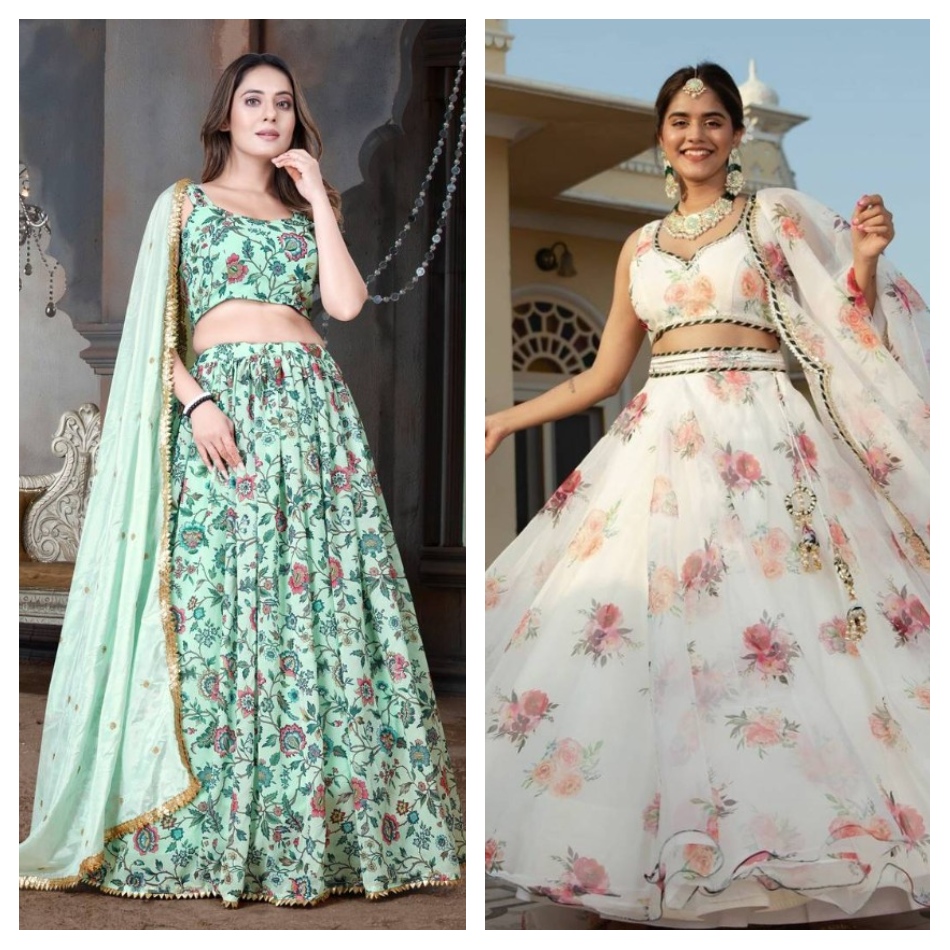
Establishing a single, dominant color for your bridal party’s lehengas is an effective way to create visual cohesiveness amongst your bridesmaids while still allowing each to have her own unique design. Choosing one dominant color (like blush pink) for each lehenga and allowing slightly varied flower patterns (like roses, peonies, and tulips all in the same soft pink) create a unified look while allowing you to have a variety of styles.
Mixing and Matching Patterns
When multiple bridesmaids wear floral lehenga cholis, they should be mixed in a way that complements rather than competes with each other. Creating visual balance is the goal when mixing and matching floral patterns. A great way to do this is to assign different scales to each dress, so one dress has tiny florals, one has medium-sized, and another has large florals. Using the same base color accomplishes the goal of being cohesive throughout the wedding party.
Another way to ensure florals coordinate with each other is by using a common design element in each lehenga (like using 3D floral appliqués, printed floral panels, or embroidered floral vines) even if the colors are different. This helps keep the overall look of your bridal party “together,” but still allows for variation.
Accessories are a key element in the creation of a perfectly coordinated floral lehenga ensemble, as they help to unite the outfit together. Jewelry, clutches and shoes can match the primary color of the lehenga or accentuate one of its secondary colors in the floral print. Daytime parties call for bridesmaids to choose delicate floral jewelry or gold plated minimalistic jewelry which does not detract from the outfit. In contrast, when it comes to evening receptions, creating an element of elegance through statement earrings, bangles and chokers using similar or matching metallic finishes adds to the grandeur of the lehenga outfit.
Dupattas or scarves can be strategically used as well. If bridesmaids have lehengas that are slightly different shades or patterns, a common dupatta color will visually connect them all together. Other examples of accessories that would work in the same way would be matching belts, embroidered borders or coordinated shoes. All of these elements will help to give the overall appearance of cohesiveness without being overly uniform in design.
Finding Wedding Venue & Theme
The venue of your Wedding will also play a big part in how your floral lehenga is styled. Weddings held outdoors such as in gardens should use lightweight fabrics such as chiffon, georgette, or organza with soft floral colors for maximum comfort. For evening outdoor weddings or indoors at receptions, bridesmaids’ lehengas should be made from heavier fabrics such as silk, brocade, or velvet with embroidered or sequined floral designs for a much more formal look and luxurious appearance. Making sure that the weight and style of fabric match the type of function will help ensure the special occasion remains comfortable from a practical as well as a stylish point of view.
Bridal Party Tips
An important part of planning multiple floral lehengas is good communication between the bride and all her bridesmaids. Sharing fabric swatches, color shades or examples of the floral lehenga sets, will produce a much better visual outcome for all concerned. Making sure that each member of the bridal party chooses a style of lehenga that flatters her shape, within color palette set by the bride, will create individual looking floral printed lehengas on each member of the bridal party while still achieving a coordinated bridal party look. As can be seen, through careful color coordination between all floral lehengas, selecting complementary pattern decisions and strategic accessories for each bridal party member, bridal party floral printed lehengas can provide an elegant, stylish, creative way to enhance the entire look of the wedding. For anyone holding their wedding in 2026, floral lehenga cholis provide a beautiful blend of modern, fresh and glamorous looks for bridesmaids at any kind of wedding including bohemian daytime functions and sophisticated evening events!
 Miss Fashion Smoke Blog
Leave a comment